


Local SEO Pricing Guide 2026: What Businesses Actually Pay and What Drives the Cost
By Brandon Aleckson, Link Helpers SEO & Web Design | Phoenix
Understanding local SEO pricing is essential for businesses aiming to enhance their online presence and attract local customers effectively. As we step into 2026, the landscape of local SEO has shifted significantly, with various factors determining what businesses can expect to pay for these services. This article delves into the critical elements influencing local SEO costs and offers insights into the pricing structures available in the market.
Small businesses often face challenges in navigating the complex world of SEO pricing, where understanding the nuances can significantly impact budgeting and service selection. Key factors such as agency expertise, service scope, and market competitiveness drive costs in this evolving landscape. We will explore the diverse pricing models available, provide recommendations, and address common queries surrounding local SEO expenses. By the end of this guide, you will have a clearer picture of local SEO pricing dynamics and how to plan your budget effectively.
Key Factors Influencing Local SEO Costs:
Several key factors play a critical role in determining how much businesses pay for local SEO services. Each element can significantly impact the overall budget and the value derived from the investment.
Agency Experience and Expertise:
Agency experience is a significant determinant of local SEO pricing. Businesses often find that seasoned agencies charge more due to their proven track record of delivering results. Experienced agencies tend to have specialized knowledge and skills that justify their higher pricing. This expertise allows them to develop strategies tailored to specific business needs, ensuring a more effective approach to SEO.
Scope of Services:
The range of services provided under a local SEO package also influences costs. Basic packages may be more affordable but often cover essential services such as Google Business Profile (GBP) setup and citation management. In contrast, comprehensive packages that include advanced features like content marketing, keyword research, and ongoing optimization usually come at a higher price. Businesses must evaluate their needs against service offerings to make informed decisions.
Market Competitiveness:
The level of competition in a business’s local market can impact SEO costs significantly. High-competition areas typically require larger budgets since businesses must invest more in SEO strategies to stand out. Understanding local market conditions is essential for budgeting effectively, as investing in SEO can lead to improved visibility and increased customer traffic.
Contract Terms:
Contract duration and payment structures can directly affect the financial commitment businesses make towards SEO services. Long-term contracts often offer discounts, making them more appealing for businesses prepared to invest in SEO for extended periods. Flexible payment options can also alter costs, allowing businesses to choose plans that best fit their cash flow and operational needs.
Service Complexity:
The complexity of the SEO services offered can lead to variations in pricing. Simple strategies may involve lower costs, while more elaborate, multifaceted campaigns require more resources and expertise, consequently increasing overall pricing. Understanding service complexity helps businesses gauge whether they are getting fair value based on the proposed strategies and anticipated outcomes.
Typical Pricing Structures:
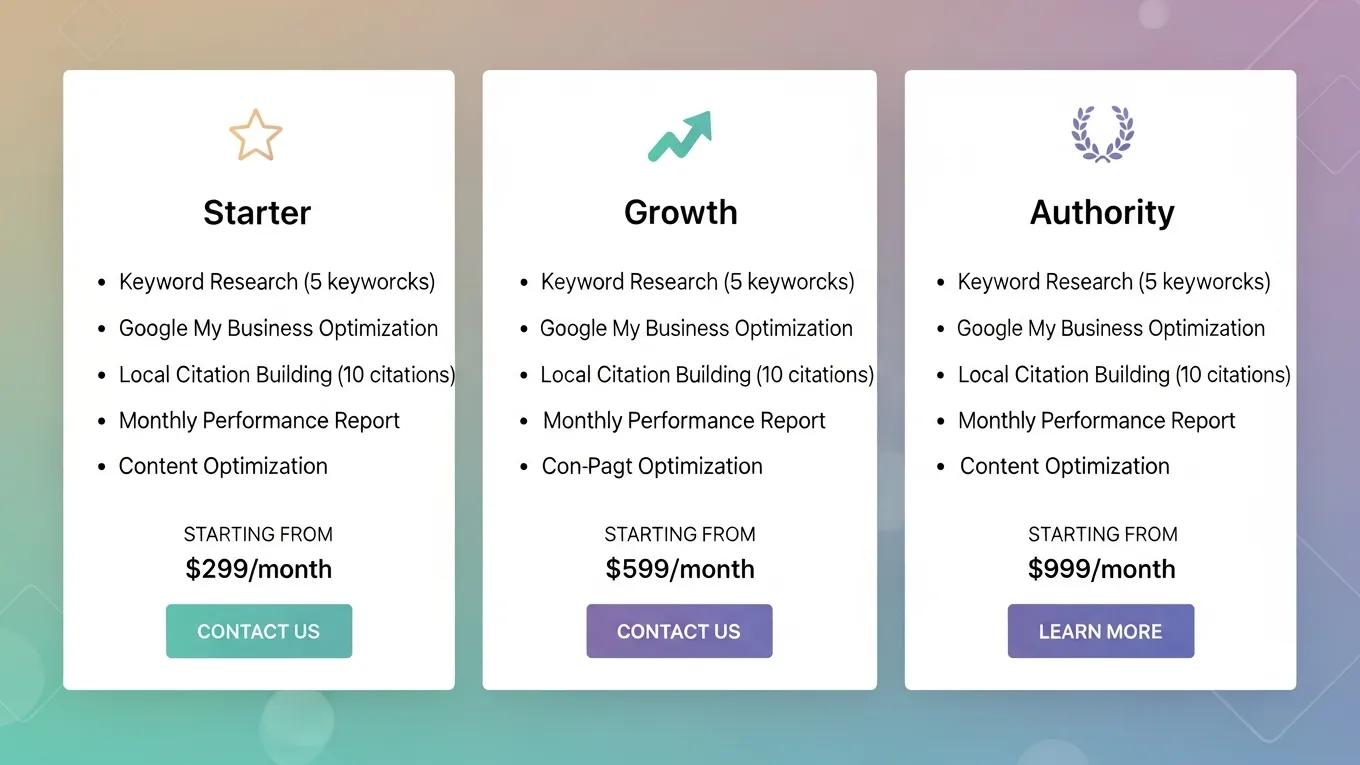
Navigating local SEO pricing structures can help businesses identify the right package to suit their needs. Here we categorize common pricing tiers, showcasing what businesses might expect to invest in local SEO.
Starter Packages:
Starter packages are generally tailored for new businesses looking to establish their online presence. These packages typically range from $500 to $1,500 per month and often include basic services such as GBP setup and citation management. Investing in a starter package can lay a strong foundation for businesses entering the digital landscape.
Growth Packages:
For companies that are expanding their online presence, growth packages are designed to offer additional services that enhance visibility. These packages typically cost between $1,500 and $3,000 per month, often including enhanced SEO strategies, content marketing, and social media integration. Businesses in growth mode will find these packages valuable as they seek to capitalize on increasing customer interest.
Authority Packages:
Authority packages are tailored for established businesses that require comprehensive SEO strategies to maintain their competitive edge. Often exceeding $3,000 per month, these packages encompass extensive optimization strategies, advanced analytics, and proactive reputation management. Businesses that opt for authority packages benefit from a holistic approach designed to bolster their online authority.
Recommendations for Businesses:

When evaluating SEO services, small businesses should consider several recommendations to maximize their investment.
- Obtain Multiple Quotes: Gaining various quotes can provide a clearer perspective on the market rate for services. This practice allows businesses to compare offerings and identify the best value based on their unique needs.
- Focus on Value Over Price: While price remains important, businesses should prioritize the overall value of services. A higher-cost package may yield better results than a cheap option that lacks depth or expertise.
- Evaluate Agency Performance: Understanding an agency’s past performance and client testimonials can provide valuable insights into their capabilities. A well-recognized agency with a strong track record ensures better return on investment.
What Are the Latest Local SEO Pricing Models in 2026?
Local SEO pricing models have evolved, emphasizing flexibility and performance-based approaches. The 2026 landscape offers subscription-based models, where businesses pay a recurring fee for ongoing services, as well as performance-based pricing, where costs are tied to specific outcomes such as increased leads or conversions.
How Do Subscription and Performance-Based Pricing Compare?
Subscription pricing provides predictability in budgeting, allowing businesses to anticipate monthly expenses based on set services. Conversely, performance-based models can align costs with actual results, making them appealing for businesses focused on measurable growth. Assessing these models’ effectiveness depends on individual business goals and financial comfort.
What Service Tiers Are Included in Typical Local SEO Packages?
Local SEO services typically fall into several tiers, each designed to cater to different needs, including starter, growth, and authority packages. These tiers range in complexity, scope, and price, allowing businesses to choose a solution that aligns with their operational goals and marketing strategies.
Which Factors Affect Local SEO Costs for Small Businesses?
Small businesses must consider specific factors that significantly impact local SEO costs, including the competitive landscape, service complexity, agency expertise, and contract structures. By understanding these elements, businesses can create a robust budgeting strategy that effectively supports their online marketing efforts.
How Does Google Maps SEO Influence Local SEO Pricing?
An essential aspect of local SEO, Google Maps optimization influences service costs significantly. As businesses vie for better visibility in search results, investment in Google Maps SEO can drive up costs, particularly in competitive markets. Focusing on optimizing GBP and implementing local citation strategies is vital to gaining an advantage.
Why Does Business Size and Industry Impact SEO Pricing?
Business size and industry directly affect SEO pricing, with larger firms often requiring more extensive services to maintain their online presence. Industries with heightened competition also see varied costs, as the necessary strategies must be more sophisticated and persistent to achieve desired results.
What Are Average Local SEO Costs for Small Businesses in 2026?
In 2026, average local SEO costs for small businesses typically range from $500 to $3,000 per month, depending on service offerings and market demands. This pricing structure reflects the competitive nature of local SEO and the diverse needs of businesses aiming to enhance their digital outreach.
How Have Small Business SEO Budgets Changed Since 2024?
Small business SEO budgets have seen notable shifts since 2024, with increased allocations towards local search optimization as businesses recognize the importance of local visibility. As consumer behavior patterns evolve, companies are investing more significantly in tailored SEO strategies to remain relevant.
What Do Case Studies Reveal About Actual SEO Spend?
Case studies demonstrate that small businesses investing in SEO often see significant returns, with well-implemented strategies resulting in higher traffic and improved lead generation. These insights underline the critical role of effective SEO in achieving business growth and maintaining a competitive edge.
How Can Businesses Effectively Budget for Local SEO Services?
To budget effectively for local SEO services, businesses should assess their marketing goals, understand local market dynamics, and prioritize essential services that support their objectives. Allocating funds based on anticipated outcomes ensures that spending aligns with potential returns.
What Role Do ROI and Service Scope Play in Budget Planning?
Evaluating the return on investment (ROI) from SEO efforts is crucial for businesses looking to refine their budgeting process. Understanding how service scope correlates with measurable outcomes allows companies to adjust their strategies to maximize benefits and align spending with their goals.
Are SEO Prices Negotiable and How to Negotiate Them?
Many businesses may wonder about the negotiability of SEO prices. While some agencies may have fixed pricing structures, others may be open to negotiation, particularly for long-term agreements. It’s advisable to approach negotiations with transparency about budget constraints and desired outcomes in mind.
Which Structured Data and Semantic Entities Improve Local SEO Pricing Clarity?
Utilizing structured data and semantic schema markup enhances pricing clarity by making service offerings more comprehensible to search engines. Implementing these strategies can positively influence local search visibility, leading to better performance and cost justification.
How Do Pricing Specification and Service Schema Enhance Transparency?
Using clear pricing specifications and service schemas helps demystify local SEO costs, allowing businesses to understand what they are paying for and the expected outcomes. This transparency fosters trust between agencies and clients, ultimately leading to better collaboration.
What FAQs Should Be Included to Address Common Pricing Questions?
To build confidence in potential clients, agencies should include comprehensive FAQs addressing common pricing questions, such as service scopes, contract terms, and ROI expectations. Clarity in communication can enhance the client-agency relationship and streamline service delivery.
What Are Emerging Trends in Local SEO Pricing for 2026 and Beyond?
Emerging trends in 2026 include increased reliance on data-driven SEO strategies, with businesses demanding detailed analytics to substantiate costs. Agencies that adapt to this trend by providing robust reporting and insights will likely capture more market share as they meet evolving client needs.
How Are Mobile Local Searches Driving Budget Increases?
With the rise in mobile local searches, businesses are allocating more funds towards mobile-friendly SEO strategies. Investing in mobile optimization creates additional operational demands, leading to higher overall SEO costs as companies strive to meet consumer preferences effectively.
Why Are Industry-Specific Pricing and Geographic Segmentation Becoming Crucial?
Understanding industry-specific pricing and geographic segmentation is increasingly essential in local SEO. Tailoring strategies based on industry norms and local competitive landscapes enables businesses to optimize their marketing efforts and achieve better ROI on their SEO investments.
If you’re looking for specialized service in a particular region, consider exploring options such as SEO company Phoenix to see how tailored solutions can benefit your business.
For businesses focusing on specific home service industries, dedicated strategies are crucial. You can find more information on home services SEO to understand how these niche approaches can drive local relevance and customer acquisition.
Monthly Retainer vs. Project-Based SEO Costs
Understanding the difference between monthly retainer fees and project-based pricing is critical for businesses choosing how to invest in local SEO services. Each pricing model offers unique benefits depending on the business’s stage, goals, and resource availability.
Monthly Retainer Tiers
Monthly retainers provide continuous SEO service with ongoing optimization, reporting, and adjustments based on performance. Below are typical retainer tiers and what they often include:
- $500–$1,500 per month: Ideal for startups and very small businesses. Services typically include basic Google Business Profile (GBP) management, citation building, local listing accuracy checks, and monthly reporting. Limited content creation or citation cleanup might be included.
- $1,500–$3,000 per month: Designed for growing businesses targeting expanded local visibility. Offerings usually encompass keyword research, content marketing focused on local themes, enhanced GBP optimization, social media integration, and competitive backlink acquisition. More frequent reporting and strategy updates are common.
- $3,000–$5,000 per month: Suited for mature businesses seeking authoritative local presence. Comprehensive SEO audits, competitor analysis, advanced content and link building strategies, reputation management, and multi-location SEO are often part of this tier. Includes detailed analytics and data-driven strategy adaptations.
- $5,000+ per month: Targeted at large enterprises or franchises with expansive local SEO needs across many markets. Customized campaigns, dedicated account management, advanced conversion tracking, technical SEO improvements, and regular in-depth consultation sessions are standard.
Project-Based Pricing
Project-based SEO pricing typically covers one-time or fixed-scope tasks without ongoing service commitments. Common project prices and what they cover include:
- Website SEO Audits: $500–$3,000 depending on site size and audit depth. Comprehensive insights on technical, on-page, and local SEO elements with prioritized action plans.
- Citation Cleanup and Management: $300–$1,200 aimed at correcting inconsistent or duplicate listings that harm local rankings.
- GBP Optimization: $300–$1,000 for complete setup or overhaul to improve profile accuracy, photos, reviews, and posting strategies.
- Local Keyword Research and Competitor Analysis: $400–$1,500 focused on identifying priority keywords and local market gaps.
When to Choose Which Model?
- Monthly retainers make sense when a business seeks sustained growth, evolving strategy, and continuous monitoring to stay competitive in local search results.
- Project-based pricing suits companies with limited budgets, or those wanting specific deliverables like a full audit or profile setup before deciding on ongoing SEO investment.
Hidden Costs of DIY SEO vs. Hiring an Agency
Many small businesses explore DIY SEO to control costs but often underestimate the hidden expenses involved. Understanding the total cost of ownership is vital to smart budgeting.
Costs of DIY SEO
- Tool Subscriptions: Professional SEO tools are essential for competitive advantage. Prices per month include approximately $99–$399 for tools like Ahrefs, SEMrush, or BrightLocal. Multiple tools might be needed for keyword research, site audits, citations, and rank tracking.
- Time Investment: Learning SEO basics and ongoing optimization require significant hours. If a staff member dedicates 10–20 hours weekly, this opportunity cost is substantial compared to their salary or outsourced fees.
- Learning Curve and Expertise: Without specialized knowledge, DIY efforts may yield limited results or cause penalties from improper practices, leading to possible revenue loss.
- Opportunity Cost of Lost Leads: Ineffective SEO means fewer website visitors and leads, which directly impacts revenue and growth potential.
- Risk of Google Penalties: Mistakes in optimization, such as keyword stuffing or building spammy links, can result in ranking drops, necessitating costly recovery strategies.
Hiring an Agency: True Cost Considerations
While agency fees might seem higher upfront, they typically include expert knowledge, streamlined processes, and access to tools bundled into the service. Agencies also provide strategic oversight, reporting, and continuous adjustment to maximize ROI:
- Bundled tool costs covered by the agency.
- Dedicated teams with SEO expertise.
- Reduced risk of costly SEO mistakes.
- Ability to focus internal resources on core business activities.
When comparing costs, businesses should factor in the comprehensive value and reduced risk agencies provide over DIY efforts.
ROI Calculations for Small Businesses
Measuring the return on investment (ROI) of local SEO is essential to justify spend and guide future budgeting.
Basic ROI Formula
ROI (%) = ((Revenue from SEO – SEO Cost) / SEO Cost) × 100
Calculating Revenue from SEO
Estimating revenue generated can be done by calculating the number of leads, conversion rate, and average customer lifetime value (CLV).
Revenue from SEO = Number of Leads × Conversion Rate × Average CLV
Example Calculation
Consider a local plumbing service business:
- Monthly SEO cost: $1,800 (monthly retainer)
- Average leads per month from SEO: 60
- Lead-to-customer conversion rate: 20%
- Average CLV per customer: $1,200
Calculations:
- Monthly customers gained = 60 leads × 0.20 = 12 customers
- Monthly revenue from SEO = 12 customers × $1,200 = $14,400
- Monthly ROI = (($14,400 – $1,800) / $1,800) × 100 = 700%
This means the business earns seven times what it spends on monthly SEO services.
2026 Industry-Specific Pricing Benchmarks
Local SEO costs vary across industries due to differences in competition, customer value, and geographic density. Here are detailed pricing benchmarks for three popular verticals.
Dental / Healthcare
HVAC / Home Services
Legal / Attorney
Reasons Some Industries Pay More:
- Competition Intensity: Legal and healthcare markets are more competitive, driving prices upward.
- Customer Value: High-value customers in legal and healthcare sectors justify larger SEO investments.
- Geographic Density: Urban centers with dense populations demand more aggressive SEO tactics due to saturation.
Understanding these industry-specific benchmarks allows businesses to set realistic expectations and find appropriate service levels to match their goals.